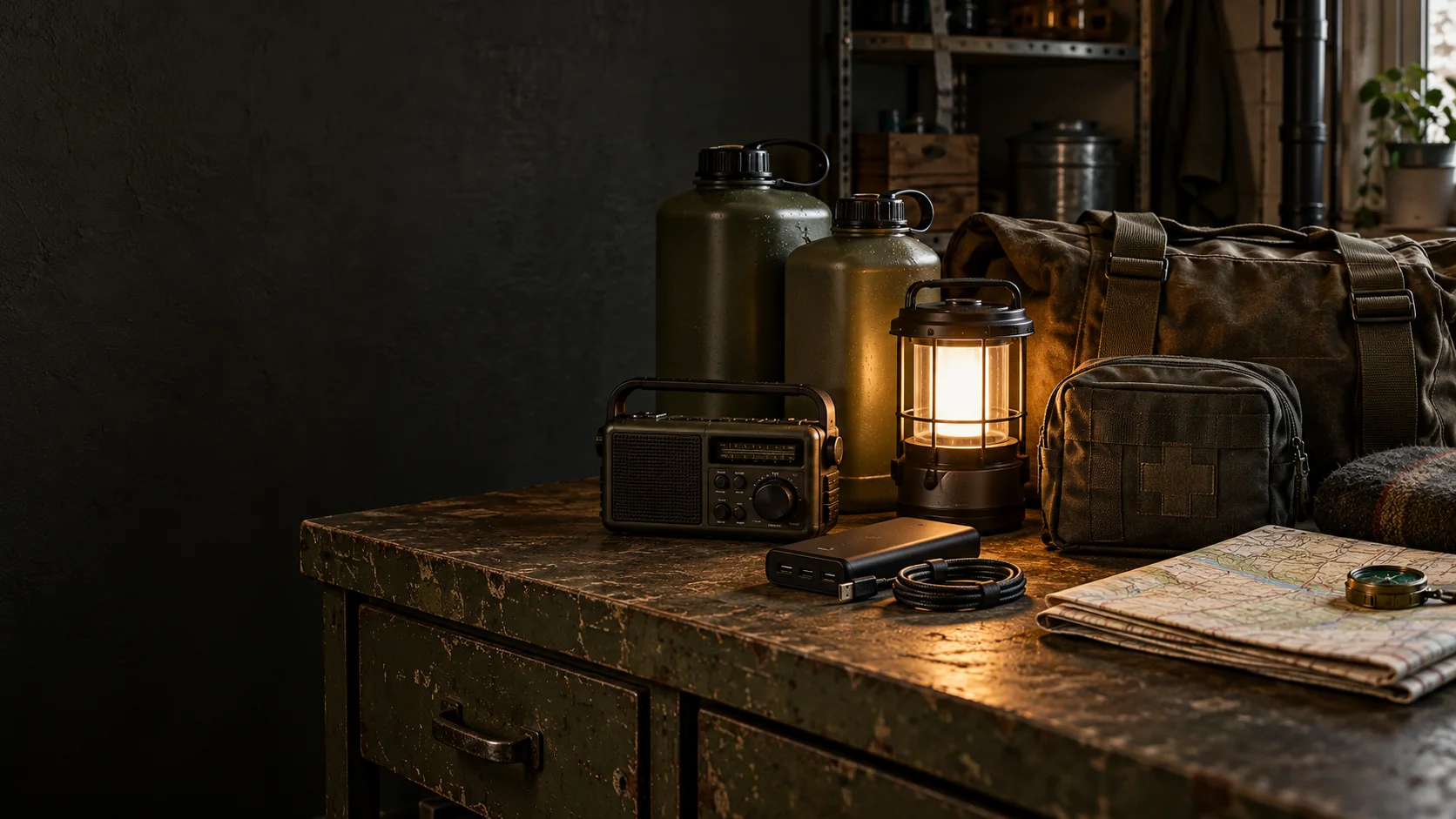
Start with water, non-perishable food, light, a battery-powered radio, first-aid supplies and essential household information. Adapt your kit to the people who will use it.
Build around your household
A list is a starting point. Consider regular medicines, accessibility needs, infants and pets. Ask your pharmacist or clinician about preparing for medication and medical-equipment needs.
Put the basics within reach
Ready.gov recommends at least three days of water and non-perishable food, alongside essentials such as a torch, radio, spare batteries, first-aid kit, sanitation supplies and a can opener. Keep useful contact information and local maps with the kit.
Check together, then revisit
Use the checklist to make a first pass. Assign gaps to a person and a realistic next action. Tell everyone where the kit lives. Revisit it when household needs change and check expiry dates and equipment condition.
Checklist
- Choose an accessible storage place.
- Identify household-specific needs.
- Check the supplies together.
Sources & further reading
Check these official sources for current advice and instructions relevant to your location.